
Avoid the “D” in Allergy Treatment
 [blog updated April 2026]
Why Allergy Decongestants Can Cause Anxiety, Insomnia, and High Blood Pressure
The Hidden Dangers of Claritin-D, Allegra-D, and Zyrtec-D
Spring allergy season is here, and with it comes sneezing, itchy eyes, sinus pressure, and miserable nasal congestion. Many people automatically reach for medications like Claritin-D, Allegra-D, or Zyrtec-D because they seem to work better for congestion than the regular versions.
What many people do not realize is that the “D” in those medications may also be causing side effects like high blood pressure, anxiety, insomnia, heart palpitations, acid reflux, and feeling jittery or “wired.”
In my practice, I see this all the time. Patients often think their allergies are getting worse when, in reality, part of what they are feeling is actually coming from the medication itself.
The good news is that there are often safer and more effective ways to manage allergy congestion without putting extra stress on your body.
The “D” in Claritin D
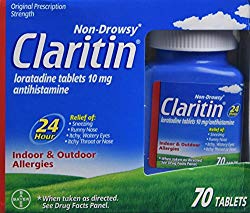
All the common antihistamines are now available without a prescription: Claritin, Allegra, and Zyrtec. Each is also available as a generic: Alavert, Fexofenadine, and Cetirizine. You can definitely save money with the generic, and it is usually comparable to the name brand.
Each of these antihistamines also comes in combination with a decongestant called pseudoephedrine. That is what the “D” stands for.
Pseudoephedrine works by shrinking swollen blood vessels in the nose, which can temporarily relieve congestion. The problem is that it does not just affect the nose. It can also tighten blood vessels throughout the body, which is why it may raise blood pressure, increase heart rate, worsen anxiety, and interfere with sleep.
I know many patients who rely totally on Claritin-D because the decongestant component gives them more relief for nasal congestion. The plain antihistamines help sneezing and itching more than congestion. Here is the catch: the “D” in these medications can cause side effects that do not occur with the plain antihistamine.
High Blood Pressure, Arrhythmia & Decongestants
Hypertension is a common side effect that I see in many patients taking decongestants.
When I see an otherwise healthy 20-year-old who is suffering from allergies and has been on Allegra-D for two months during allergy season, I check their blood pressure. Often, I will get a reading around 150/90. This tells me the decongestant is affecting their blood pressure. If the patient stops the decongestant-antihistamine, the blood pressure usually returns to normal within a couple of weeks.
Decongestants can also cause palpitations or arrhythmias in patients who are especially sensitive to the medication or who may have an underlying heart condition they do not know about.
Interestingly, I have read reports of healthy athletes and football players developing heart rhythm problems while taking decongestants. I believe this is because they are pushing their bodies hard already, and the medication adds even more strain to the cardiovascular system.
People with high blood pressure, heart disease, thyroid conditions, or a history of panic attacks should be especially cautious with these medications. Even if you are otherwise healthy, it is worth paying attention to how you feel after taking them.
Getting Some Shut-Eye

Sleep is commonly affected by decongestants.
I have patients who think their allergies are keeping them awake at night, when in reality the decongestant they are taking in the evening is the real culprit.
Pseudoephedrine can have an effect similar to caffeine, but it often lasts much longer. Many people feel restless, wired, shaky, or unable to settle down. Some people even wake up in the middle of the night with a racing heart.
I understand that patients feel they cannot get a good night’s sleep if they have nasal congestion. But again, a combination of nasal sprays can often provide the same relief with fewer side effects.
Nasal steroid sprays are often a better choice for ongoing congestion because they work locally in the nose instead of stimulating the entire body.
Not Good Together
Anxiety is another side effect of decongestants that is not commonly discussed.
I have patients who are taking anti-anxiety medications. When I find out they are also taking an over-the-counter antihistamine-decongestant, I explain to them that their body is essentially in a tug-of-war. The decongestant is revving them up while the anti-anxiety medication is trying to calm them down.
That is not healthy for the body or the mind.
Patients often describe feeling jittery, irritable, shaky, overstimulated, or unable to relax. Some even feel like they are having a panic attack without realizing their allergy medication may be contributing.
Gastrointestinal reflux, also known as GERD, is another condition that can worsen with decongestants. These medications can increase acid production in the stomach, which may trigger heartburn, throat irritation, chest discomfort, or regurgitation. If you already take acid blockers for GERD, taking a decongestant may be making your symptoms worse.
Who Should Avoid Allergy Medications With a “D”?
You should be especially cautious with Claritin-D, Allegra-D, Zyrtec-D, and similar products if you have:
- High blood pressure
- Heart disease
- Heart palpitations
- Anxiety or panic attacks
- Insomnia
- GERD or acid reflux
- Thyroid problems
- Sensitivity to caffeine or stimulants
- A history of arrhythmias
Children, older adults, and pregnant women should also speak with a doctor before regularly using these medications.
Better Alternatives for Allergy Congestion
The answer to controlling severe nasal congestion due to allergies does not have to be relying on decongestants every day.
Many of my patients do very well with safer, targeted treatments that reduce congestion without putting extra stress on the heart and nervous system.
These can include:
- Saline nasal rinses
- Nasal steroid sprays like Flonase or Rhinocort
- Antihistamine nasal sprays
- Allergy testing to identify triggers
- Avoiding exposure to pollen, mold, dust, and pet dander
- Sublingual allergy drops to address the root cause of allergies
- Natural anti-inflammatory support, such as quercetin and Vitamin C in appropriate patients
If you do have severe allergy symptoms, it is important to get tested to find out what you are specifically allergic to. The good news is that allergy relief has never been simpler with newer treatment approaches like sublingual allergy drops, which can help reduce symptoms without many of the side effects seen with traditional allergy medications.
Allergy Drops to the Rescue
The answer to controlling severe nasal congestion due to allergies does need proper medical attention. Many of my patients can be helped by combining safer topical nasal sprays to get allergy relief. If you do have severe allergy symptoms, you should get tested to find out what you are specifically allergic to. The good news is that allergy relief has never been simpler with using sublingual allergy drops. I’ve been using the allergy drops for 15 years, and you won’t find any of my patients taking decongestants.
Enjoy the rest of your summer: Doctor’s order.
Do Allergy Drops Work?
Watch the video below to learn about Luke’s experience with allergy drops treatment to get rid of his severe allergies.
Final Thoughts
If you are taking Claritin-D, Allegra-D, Zyrtec-D, or another allergy medication with a decongestant and you have been experiencing high blood pressure, anxiety, insomnia, heart palpitations, or worsening reflux, your medication may be part of the problem.
You do not have to suffer through allergy season feeling miserable, overstimulated, and exhausted.
With proper allergy testing and a more personalized treatment plan, there are often better ways to control congestion and allergy symptoms while helping your body feel calmer and healthier overall.
At Mitchell Medical Group, we help patients uncover the root cause of their allergy symptoms and find safer, more effective long-term solutions.
– Dr. Dean Mitchell, M.D.
Mitchell Medical Group, NYC
About the Author – Dr. Dean Mitchell, M.D. 
Dr. Dean Mitchell, M.D. is a Board Certified Allergist and Immunologist based out of NYC. He graduated from the Sackler School of Medicine and completed training at the Robert Cooke Allergy Institute in New York City. He is also a Clinical Assistant Professor at Touro College of Osteopathic Medicine, a fellow of the American Academy of Allergy, Asthma, and Immunology, and the author of Dr. Dean Mitchell’s Allergy and Asthma Solution: The Ultimate Program for Reversing Your Symptoms One Drop at a Time and Conquering Candida: The New 30-Day Protocol for Restoring Your Microbiome and Health. Dr. Dean Mitchell, M.D. has also been featured in The New York Times, The Huffington Post, Fitness Magazine, Dr. Oz and News NY 1. Dr. Mitchell also hosts the podcast The Smartest Doctor in the Room – a combination of a lively, personal, and in-depth interview with top healthcare specialists.
