
Why Benadryl isn’t the Optimal Choice for Allergic Swelling
CONNECT WITH US:
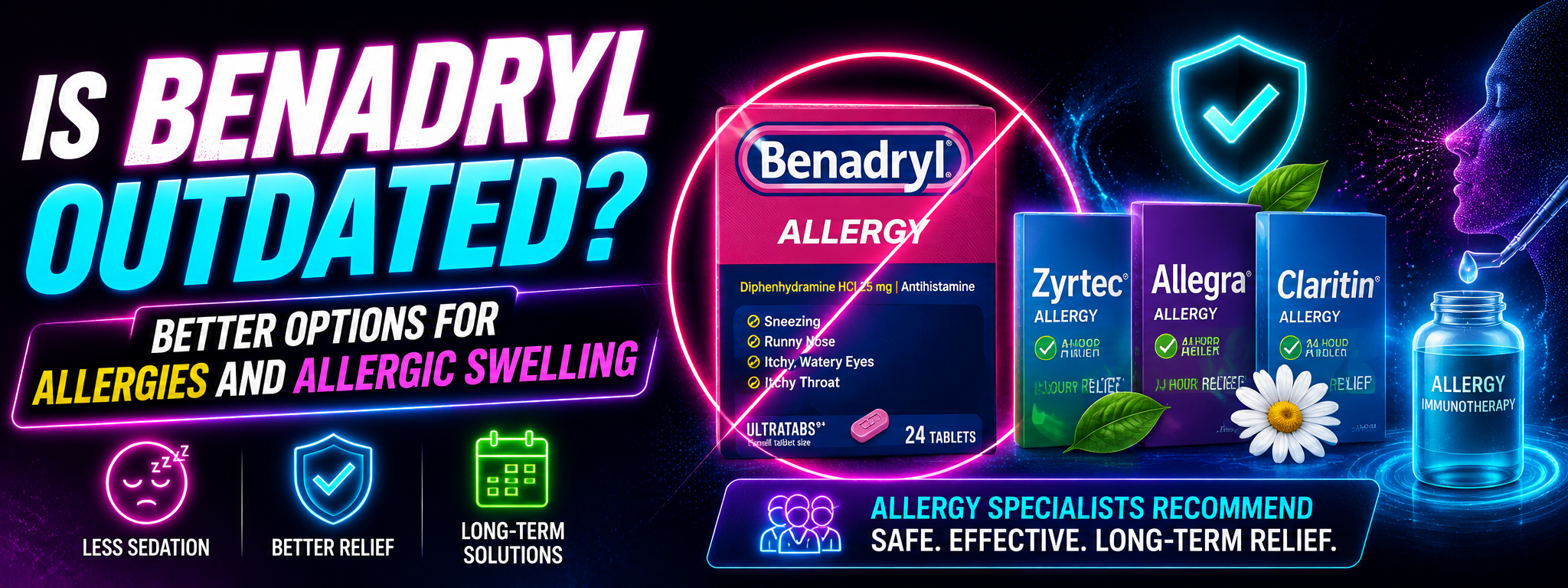
[blog updated May 2026]
Why Allergy Specialists Are Moving Beyond Benadryl for Seasonal Allergies
The Problem with Benadryl: Safer, Longer-Lasting Allergy Treatments Explained
For decades, Benadryl has been one of the most recognized allergy medications in America. Many people automatically reach for it when they experience allergic swelling, itchy eyes, hives, sneezing, or seasonal allergy symptoms.
But according to many allergy specialists today, Benadryl may no longer be the best option for many allergy situations.
That surprises a lot of people.
After all, Benadryl has been around for generations. It’s sold everywhere, commonly used in emergency rooms, and often viewed as a “strong” allergy medication. But newer research and decades of clinical experience have changed how many physicians think about antihistamines and long-term allergy management.
Dr. Dean Mitchell, founder of Mitchell Medical Group and host of The Smartest Doctor in the Room podcast, recently discussed this topic in depth during a podcast episode focused on seasonal allergies, antihistamines, nasal sprays, and modern immunotherapy treatments.
As Dr. Mitchell explained during the episode:
“What’s the good of taking an allergy medication if you’re feeling so groggy and tired that you can’t enjoy being outside?”
That question gets to the heart of why so many patients are now looking for better alternatives.
If you struggle with allergic swelling, seasonal allergies, chronic sneezing, itchy eyes, sinus congestion, or allergy fatigue, understanding the differences between older and newer antihistamines could dramatically improve your quality of life.
What is Benadryl?
Benadryl is the brand name for diphenhydramine, a first-generation antihistamine that has been used since the 1940s.
Antihistamines work by blocking histamine, a chemical your body releases during allergic reactions. Histamine is responsible for many common allergy symptoms, including:
- Swelling
- Sneezing
- Runny nose
- Itchy eyes
- Hives
- Skin itching
- Nasal congestion
Benadryl can reduce these symptoms quickly, which is one reason it became so popular.
However, older antihistamines like Benadryl cross into the brain much more easily than newer antihistamines. This is why they often cause significant drowsiness, fatigue, and mental fog.
Why Benadryl May Not Be the Best Choice Anymore
While Benadryl can still play a role in certain acute allergic reactions, many allergy specialists now prefer second-generation antihistamines for day-to-day allergy management.
There are several reasons why.
Benadryl Is Highly Sedating
One of the biggest complaints people have with Benadryl is how tired it makes them feel.
Many patients describe:
- Brain fog
- Grogginess
- Daytime fatigue
- Difficulty concentrating
- Feeling “hungover” the next day
This can interfere with:
- Work productivity
- Driving
- School performance
- Exercise
- Sleep quality
- Daily functioning
For adults trying to function during allergy season, this can become a major problem.
According to the Cleveland Clinic and other medical organizations, first-generation antihistamines are much more likely to impair alertness and cognitive performance than newer medications.
Benadryl Does Not Last Very Long
Another drawback is that Benadryl is relatively short-acting.
Dr. Mitchell notes that Benadryl often only works for a few hours before symptoms return.
That means many people:
- Need multiple doses
- Experience fluctuating symptom relief
- Feel tired repeatedly throughout the day
This can create a frustrating cycle during severe allergy seasons.
Better Alternatives to Benadryl for Seasonal Allergies
Modern second-generation antihistamines are generally considered safer and easier to tolerate for ongoing allergy symptoms.
These include:
These medications were designed to:
- Cause less sedation
- Last longer
- Provide more stable symptom control
- Improve compliance
As Dr. Mitchell explained during the podcast:
“These second-generation antihistamines all have a big advantage over Benadryl in that they are longer-acting and typically non-sedating.”
Many patients also don’t realize that the generic versions work the same way as the brand names but are often significantly less expensive.
Benadryl vs. Zyrtec, Claritin, and Allegra
Zyrtec (Cetirizine)
- Often very effective for strong allergy symptoms
- Can still cause mild drowsiness in some people
- Long-lasting relief
Claritin (Loratadine)
- Less sedating
- Good for mild-to-moderate allergies
- Widely available
Allegra (Fexofenadine)
- Typically, the least sedating
- Popular for daytime allergy relief
- Good option for people sensitive to fatigue
Every patient responds differently, which is why personalized allergy treatment matters.
The Problem With “D” Allergy Medications
One important warning Dr. Mitchell discusses is combination medications like:
- Claritin-D
- Allegra-D
- Zyrtec-D
The “D” stands for decongestant.
While these medications can temporarily open nasal passages, they may also cause:
- Increased heart rate
- Anxiety
- Elevated blood pressure
- Insomnia
- Jitteriness
- Acid reflux
This is especially important for adults with:
- High blood pressure
- Heart conditions
- Anxiety disorders
- Sleep problems
Many patients don’t realize these symptoms may be connected to their allergy medication.
Dr. Mitchell strongly emphasizes that medications alone are usually temporary symptom management.
The long-term goal is desensitization, also known as immunotherapy.
Immunotherapy works by gradually exposing the immune system to tiny amounts of allergens over time. This helps retrain the immune system and reduce overreaction.
Historically, allergy shots were the primary form of immunotherapy.
But they came with major drawbacks:
- Weekly office visits
- Multi-year treatment plans
- Time commitments
- Needle anxiety
- Risk of severe allergic reactions
Allergy Drops vs. Allergy Shots
Sublingual allergy drops offer several potential advantages:
- No injections
- At-home treatment
- Better convenience
- Higher compliance
- Lower risk of severe reactions
Dr. Mitchell also notes that compliance rates are dramatically higher with allergy drops because patients do not need constant office visits.
For busy adults and families, this can make long-term allergy treatment much more realistic.
When Should You See an Allergy Specialist?
You should consider seeing an allergy specialist if:
- Symptoms interfere with daily life
- You rely heavily on Benadryl
- You experience allergic swelling
- Allergy medications stop working
- You develop fatigue or brain fog
- Symptoms last most of the year
- You suspect food allergies
- You want long-term solutions instead of temporary relief
A comprehensive allergy evaluation may help uncover triggers and create a more effective treatment strategy.
Frequently Asked Questions
Is Benadryl bad for allergies?
Not necessarily, but many specialists now prefer newer antihistamines because they last longer and cause less sedation.
Why does Benadryl make me so tired?
Benadryl crosses into the brain more easily than newer antihistamines, causing drowsiness and cognitive slowing.
What is the best antihistamine for seasonal allergies?
It depends on the patient, but common second-generation options include Zyrtec, Allegra, Claritin, and Xyzal.
Are allergy shots outdated?
Not completely, but many physicians now also use sublingual immunotherapy because it may offer greater convenience and fewer severe reactions.
What are sublingual allergy drops?
They are allergy immunotherapy drops placed under the tongue that gradually desensitize the immune system to allergens.
Final Thoughts
Benadryl may still have a role in certain allergic reactions, but for many patients, it is no longer considered the best long-term solution for seasonal allergies or chronic allergy symptoms.
Newer antihistamines, targeted nasal sprays, eye drops, and immunotherapy approaches may offer safer, longer-lasting, and more effective relief.
If allergies are affecting your energy, sleep, concentration, or quality of life, it may be time to move beyond temporary symptom control and explore a more personalized treatment approach.
At Mitchell Medical Group, Dr. Dean Mitchell has spent decades helping patients with seasonal allergies, allergic swelling, food allergies, mast cell disorders, and complex immune-related conditions using both conventional and integrative approaches.
If you are looking for long-term answers, professional guidance can make an enormous difference.
Think You Suffer from Food Allergies
If you think your angiodema is related to a food allergy. Contact our office to schedule an allergy test to confirm. We offer pain-free allergy testing in our NYC and Long Island offices.
We offer a proven combination treatment for dangerous food allergies – XOLAIR + food allergy drops.
Related Articles

- Avoiding the “D” in Allergy Treatment
- Mom’s Beware of the Allergic March
- Living a Safer Life with a Dangerous Food Allergy with Allergy Drops
About the Author – Dr. Dean Mitchell, M.D.

Dr. Dean Mitchell, M.D. is a Board Certified Allergist and Immunologist based out of NYC. He graduated from the Sackler School of Medicine and completed training at the Robert Cooke Allergy Institute in New York City. He is also a Clinical Assistant Professor at Touro College of Osteopathic Medicine, a fellow of the American Academy of Allergy, Asthma, and Immunology, and the author of Dr. Dean Mitchell’s Allergy and Asthma Solution: The Ultimate Program for Reversing Your Symptoms One Drop at a Time. Dr. Dean Mitchell, M.D. has also been featured in The New York Times, The Huffington Post, Fitness Magazine, Dr. Oz and News NY 1. Dr. Mitchell also hosts the podcast The Smartest Doctor in the Room – a combination of a lively, personal and in-depth interview with top healthcare specialists.
References:
Everything you need to know about angioedema, MedicalNewsToday.com – https://www.medicalnewstoday.com/articles/216095.php
Cortisone, Oral Tablet. Healthline.com – https://www.healthline.com/health/cortisone-oral-tablet
What is Angiodema? Penn Medicine – https://www.pennmedicine.org/for-patients-and-visitors/patient-information/conditions-treated-a-to-z/angioedema

CONNECT WITH US:
Moms: Here’s What You Need to Know About New Hope for Food Allergies
Your child just had another allergic reaction.…
CONNECT WITH US:
neffy – The Game Changer in Allergy Treatment
For anyone with severe allergies, especially to food or insect stings,…